
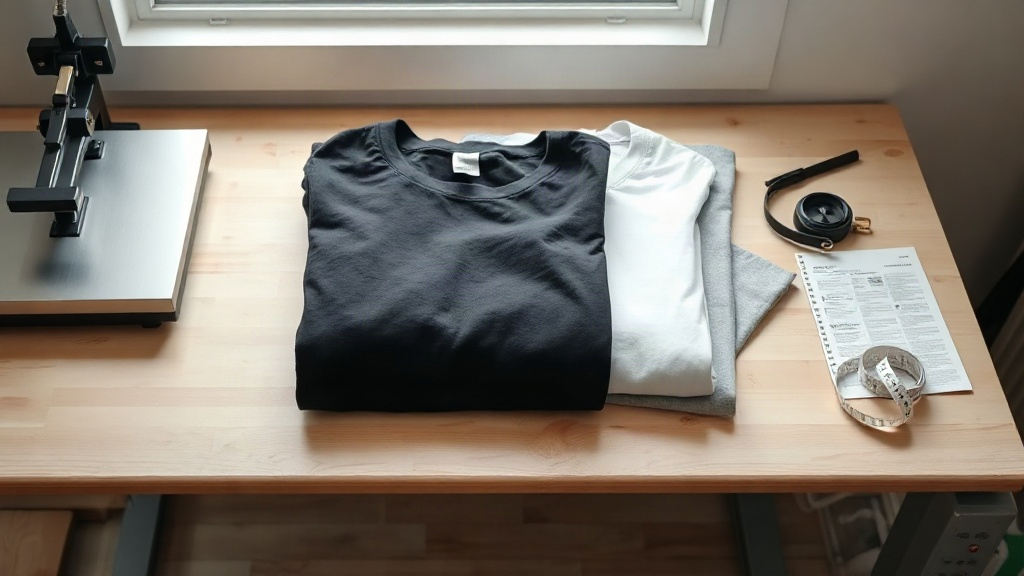
Walk into any print shop and you will hear the same quiet confession from experienced decorators: the print is only half the job. The other half is the shirt underneath it. That is where smart blanks come into the conversation, because choosing the right blank decides whether a customer wears your work twice or every week for two years. This guide is written for people who actually decorate garments, whether you run a small heat press operation out of a garage or manage orders for a growing brand, and it covers how to evaluate blanks, where shaka wear fits into the picture, and how dtf transfers change the way you plan your inventory.
What "Smart Blanks" Actually Means in Practice
The term gets thrown around loosely, so let us be concrete. A smart blank is not a specific brand or a single fabric. It is a blank that matches three things at once: your decoration method, your customer's expectations, and your price ceiling. A heavyweight cotton tee that prints beautifully with water-based ink is a smart blank for a streetwear label. That same tee is a poor choice for a corporate 5K run where everyone wants a light, breathable shirt at a low unit cost.
When buyers treat blanks as a commodity and pick purely on the lowest wholesale price, problems surface later. Printers see dye migration on dark polyester, inconsistent sizing between dye lots, or shrinkage that ruins a carefully planned run. Smart blanks are chosen with those failure points in mind before the first order is placed.
Fabric weight and what it signals
Fabric weight, measured in ounces per square yard or grams per square meter, tells you more about a garment than almost any other spec. A 4.2 oz ring-spun cotton tee feels light and drapes softly, which suits retail-style fashion prints. A 6.0 oz or heavier tee holds structure, hides minor imperfections in the print area, and tends to survive repeated washing with less distortion.
There is a tradeoff. Heavy blanks cost more, ship heavier, and can feel stiff in warm climates. Light blanks cost less and feel comfortable but show every wrinkle and can pill faster. The right answer depends on who is wearing the shirt and how often.
Ring-spun versus open-end cotton
Ring-spun cotton goes through extra spinning that produces a finer, softer yarn. Open-end cotton is faster and cheaper to produce, with a slightly rougher hand feel. For promotional work where the shirt is a giveaway, open-end is often fine. For anything a customer pays retail for, ring-spun almost always wins on perceived quality.
Why Shaka Wear Keeps Coming Up in Decorator Circles
If you spend time in print forums or wholesale Facebook groups, shaka wear shows up regularly, and usually for the same reasons. The brand built its reputation on heavyweight streetwear-oriented silhouettes, boxy fits, and a price point that sits between budget blanks and premium retail labels. For shops serving skate brands, urban boutiques, or anyone chasing that oversized look, it is a natural starting point.
What matters more than the name is understanding how a given style behaves under your press. Heavyweight cotton takes plastisol and DTF well because the fabric surface is stable and does not stretch dramatically during application. Boxy cuts also give you more usable print area across the chest and back, which matters if you are pressing large graphics.
Fit expectations and sizing runs
Streetwear-oriented blanks often run larger and more relaxed than standard retail tees. That is a feature, not a bug, but it creates a practical problem: if you mix brands in one order, your size chart becomes inconsistent. Customers who order a medium from one style and a medium from another may receive two very differently sized shirts.
The fix is boring but effective. Keep a physical sample of every blank style you stock, labeled with its measured chest width and body length. Measure each new batch against the sample before you print. It takes ten minutes and prevents a surprising number of returns.
How DTF Transfers Change Your Blank Strategy
Direct-to-film printing has reshaped small-batch decoration because it removes many of the constraints that used to dictate blank choice. With dtf transfers, you can press full-color, highly detailed artwork onto cotton, cotton blends, and many synthetic fabrics without the setup costs of screen printing or the pretreatment requirements of DTG on dark garments.
That flexibility has a direct effect on what counts as a smart blank. Suddenly, a 50/50 poly-cotton blend becomes viable for a detailed multicolor design. A performance polyester shirt that would have been a nightmare with water-based ink becomes a reasonable option. You are no longer locked into 100% ring-spun cotton to get good results.
Where DTF still has limits
Honesty matters here. DTF transfers sit on top of the fabric rather than bonding into the fibers the way some other methods do. On very stretchy or highly textured garments, the film can crack or lift at the edges over time. On garments with a heavy silicone finish or water-repellent coating, adhesion can fail outright.
If you are pressing onto an unfamiliar blank, run a test piece first. Wash it, stretch it, and check the edges. That single test tells you more than any spec sheet.
A simple pairing checklist
- 100% cotton, 5.5 oz or heavier: excellent for DTF, screen print, and embroidery
- Cotton/poly blends: good DTF performance, watch for dye migration on dark colors
- 100% polyester performancewear: workable with DTF, but test adhesion and stretch recovery
- Tri-blends: soft and popular, though the poly content can affect ink absorption
- Coated or water-repellent fabrics: usually a poor fit for heat-applied transfers
Building a Blank Inventory That Does Not Waste Money
Most small shops overbuy in the wrong places. They stock ten colors of a cheap tee nobody asks for and run out of black and white in the two styles that actually sell. A better approach is to anchor your inventory around a small number of proven smart blanks, then add specialty styles only when a client order justifies it.
Start with black and white in your best-selling fit, in a mid-weight ring-spun cotton. Add one heavyweight option for streetwear clients and one budget option for giveaways. That gives you coverage for the majority of orders without tying up cash in slow-moving stock.
Track cost per finished shirt, not cost per blank
A blank that costs two dollars less but produces more misprints, more returns, and more customer complaints is not cheaper. Keep a simple record of your reject rate per style. After a few months, the numbers will tell you which blanks deserve shelf space and which ones should be dropped.
Frequently Asked Questions
What makes a blank shirt "smart" for DTF printing?
A smart blank for DTF has a stable, smooth surface, low stretch, and no heavy finishing coating that blocks adhesion. Mid-weight to heavyweight cotton and cotton-rich blends tend to perform best. Always test an unfamiliar style before committing to a full production run.
Is Shaka Wear good for heat-applied transfers?
Their heavyweight cotton styles generally press well because the fabric is dense and holds its shape during application. The main thing to watch is the relaxed fit, which means your artwork placement should be adjusted so it does not sit too low on the chest.
How many blank styles should a small print shop keep in stock?
Most small operations do well with three to five core styles covering budget, mid-weight, and heavyweight tiers, each in a limited color range. Expand only when repeat client demand justifies the extra inventory cost.
Do smart blanks cost more than standard wholesale tees?
Not necessarily. The point is fit for purpose, not price tier. Sometimes the smarter choice is a cheaper open-end cotton tee for a giveaway, and sometimes it is a heavier ring-spun shirt for a retail line. The decision should follow the end use.
Can I mix blank brands within a single order?
You can, but sizing and color consistency will vary between brands. If you do mix, verify measurements against physical samples and warn customers that fit may differ slightly between styles.